The Christkindelsmärik on Place Broglie
Every Christmas market in Strasbourg traces back to this one. The Christkindelsmärik has been held since 1570, and its home on Place Broglie is still the largest of the city's market squares. This guide explains the name, what the chalets sell, how the mug deposit works and when to come if you want room to move.
A market since 1570
The Christkindelsmärik was first held in 1570, which makes it one of the oldest Christmas markets in Europe. The name is Alsatian, the regional dialect, for "market of the Christ Child". Since 1992 the city has marketed itself as "Strasbourg, Capitale de Noël", and the markets have spread to about a dozen sites across the old town. Place Broglie remains the original and the largest.
That age shows in the mood more than in the stalls themselves. The square is long and wide, and it feels like the main street of the season. Locals use it too, which is not true of every market in the center.
Finding Place Broglie
Place Broglie lies on the north side of the Grande-Île, a few minutes on foot from Place Kléber and its Great Tree. The two squares make a natural pair. Browse the chalets on Broglie, then walk over for one of the Great Tree's hourly light shows. From Broglie the cathedral is a short walk south through the old lanes, where more chalets cluster around Place du Château and Place de la Cathédrale.
The Homme de Fer tram stop next to Place Kléber is the easiest way in, and security checks at the entrances to the island apply for the whole market period. Getting to the markets explains the trams and park-and-ride, and Place Kléber and the Great Christmas Tree has the show times and where to stand.
What the chalets sell
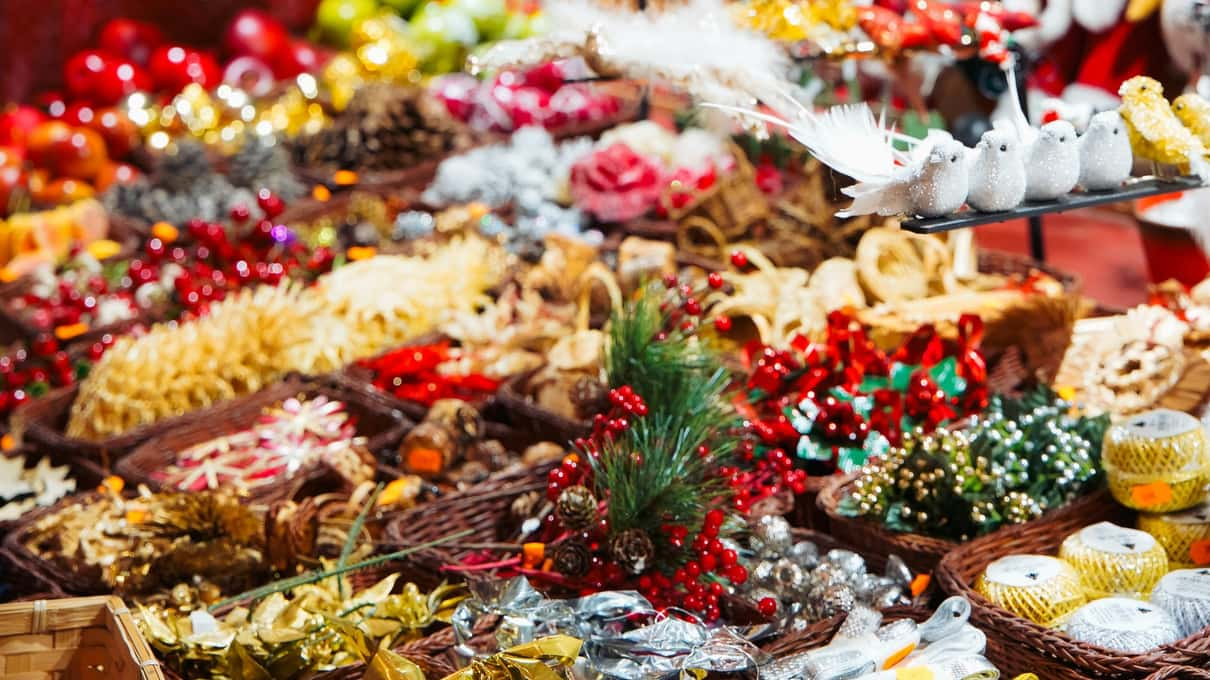
Broglie mixes crafts and decorations with food. You can buy ornaments for the tree and small gifts, and the food chalets sell everything from bretzels to roasted chestnuts.
- Gingerbread. The stall of Mireille Oster, a Strasbourg name in pain d'épices, is the one gingerbread lovers look for. Gingerbread keeps well, so it makes a good gift to carry home;
- Hot wine. Chez Mathilde's hot red wine is where many locals stop after work, which tells you something about it. Mulled wine comes red or white across the markets, and hot apple juice is the usual alcohol-free choice;
- Biscuits. Bags of bredele, the small Christmas biscuits every Alsace family bakes, from butter rounds to cinnamon stars;
- Decorations. Baubles and ornaments of every kind, not all of them handmade (more on that below).
Prices on the market are modest. A cup of wine or a bag of biscuits costs a few euros, and most stalls take cards, though some small ones prefer cash. Our guide to Alsatian Christmas food goes through what to eat and drink stall by stall.
How the mug deposit works
Hot drinks come in reusable mugs, not paper cups. When you buy your first wine or juice, the price includes a deposit on the mug. Hand the mug back when you are done and you get the deposit back, or buy your next drink in it. The mugs carry Strasbourg designs, and plenty of visitors keep one as a souvenir. In that case the deposit is simply what the souvenir costs.
Hold on to the mug between squares rather than returning it at every stop. It saves time at the counter, and the queues at the wine chalets are long enough after dark.
Handmade or mass-produced?
Not everything on a Christmas market was made in Alsace, and Place Broglie is no exception. Some chalets sell factory-made decorations you could find in any city. That is fine if you like them, but check what you buy if you want something local.
- Ask the stallholder where the piece was made. Craftspeople are happy to tell you, and a vague answer tells you something too;
- Look at the base or the label. A maker's name and a town are a good sign;
- Compare the same item on two or three stalls. Identical pieces on several chalets usually come from a catalog;
- For local goods, walk on to the Irréductibles Petits Producteurs Alsaciens market on Place Louise-Weiss, or to the Meisenthal glass baubles on Place Benjamin-Zix, both in Petite France.
When to come
In the first couple of hours after the 11:30 am opening you can browse without being carried along by the crowd. From late afternoon the after-work wave arrives, and by dusk, around 4:35 pm, the square is at its fullest and its prettiest. Weekdays are far calmer than weekends (Monday and Tuesday most of all), and late November is easier than mid-December. The full calendar sits in market dates and opening hours. Final times appear in the city's own program shortly before opening, so look there before you travel.
For a guide who knows the side streets, Bretzel&Fun's Christmas Market by Night, from ~$50, meets at Place Saint-Étienne at dusk for an hour and a half with six guests at most, takes in the tree on Place Kléber and the corners locals use to escape the crowds, and includes one Alsatian mulled wine. The catch is a thin record. It sells on GetYourGuide only, with 23 reviews, all perfect. It also walks at dusk, the hour when the lanes are fullest.
Tastings at the markets in two hours
Do Eat Better leaves Place d'Austerlitz at 3 pm for mini kugelhopf, a bretzel gratiné, the cathedral market and pain d'épices in Petite France, with a hot wine with honey (or an alcohol-free drink), from ~$62. It skips Place Broglie, and the listing is new, with no reviews yet.
Pairing Broglie with the other squares
Place Broglie is also a stop on Discover Strasbourg's guided markets walk, from ~$39, which serves its mulled wine or hot juice here before ending at the tree on Place Kléber. On your own, an evening that starts on Broglie and ends at the cathedral, with a light show on Kléber in between, covers the heart of the season in three hours. If you travel with children, Strasbourg at Christmas with kids explains how to handle the crowds here with a stroller, and the evening walk on our home page strings every main square together.