Strasbourg in December: weather and what to wear
Pack for damp cold rather than deep frost. December in Strasbourg brings gray skies and short days, with temperatures that hover just above freezing, and the markets keep going whatever the sky does. This guide explains the weather and the clothes for long evenings among the chalets, then how to fill a day of steady rain.
What a December day feels like
Strasbourg in December is cold and damp rather than bitter. Daytime highs sit around 41 °F (5 °C) and nights hover around freezing. The sky can stay a flat gray for days at a time. Snow comes and goes, but it rarely settles in the city for long, so a white Christmas market is a bonus rather than something to plan on. What catches visitors out is less the number on the thermometer than the hours spent standing still. You wait at a chalet and then linger over a mug, and the cold works its way up from wet cobbles through the soles of your shoes.
The upside is that the weather hardly changes the experience. The chalets have roofs and the squares stay lively in drizzle. A gray afternoon also makes the lights look brighter once the dark comes down.
Short days and long evenings
The sun rises around 8 am and sets around 4:35 pm. That sounds gloomy, yet it works in your favor. The lights on the chalets and along the quays come on from late afternoon, so you see the city lit without staying out late. The markets usually open about 11:30 am and close about 9 pm, from the last Friday of November until 24 December, when the chalets shut at about 6 pm, and they stay closed on 25 December. Final hours appear in the city's program shortly before the season. Until then, our page on market dates and opening hours gives the usual pattern.
Use the daylight for the sights that need it. Climb onto the free terrace of the Barrage Vauban for the view over the Ponts Couverts, or look at the pink sandstone of the cathedral before the light fades. Then give the dark hours to the stalls. Petite France to the cathedral through the lit lanes has a walking route that fits a short day.
What to wear
Dress for a slow walk with frequent stops rather than a brisk one. The list is short.
- Layers. A thermal or wool base layer under a sweater and a warm coat lets you peel one off in a heated shop or a crowded winstub, then put it back on outside;
- Waterproof boots with grip. The cobbles of the Grande-Île are often wet, and in a cold snap they turn slippery. Waterproof soles with a good tread matter more than anything else in the suitcase;
- Hat and gloves. You lose heat fastest while standing at the chalets. Thin gloves that let you hold a mug and handle coins help, since some small stalls prefer cash;
- A scarf or neck warmer. The damp air finds every gap at the collar, above all in the open squares by the river;
- A small backpack. It keeps both hands free for a mug and a bretzel, and a small bag makes the security checks at the entrances to the Grande-Île simpler;
- A hood rather than an umbrella. In packed lanes an open umbrella pokes the people around you, while a waterproof jacket with a hood keeps you dry without the elbow fights.
Cold feet at the Great Tree
Each hourly light show on Place Kléber gathers the densest crowd of the evening around the Grand Sapin, about 30 m (about 100 feet) tall. You stand packed in with everyone else, which is warm at shoulder height and cold at the feet, and the after-work hours add locals to the crowd. Arrive just before the hour, and keep moving between shows rather than holding a spot. Place Kléber and the Great Christmas Tree lists the shows and suggests where to stand.
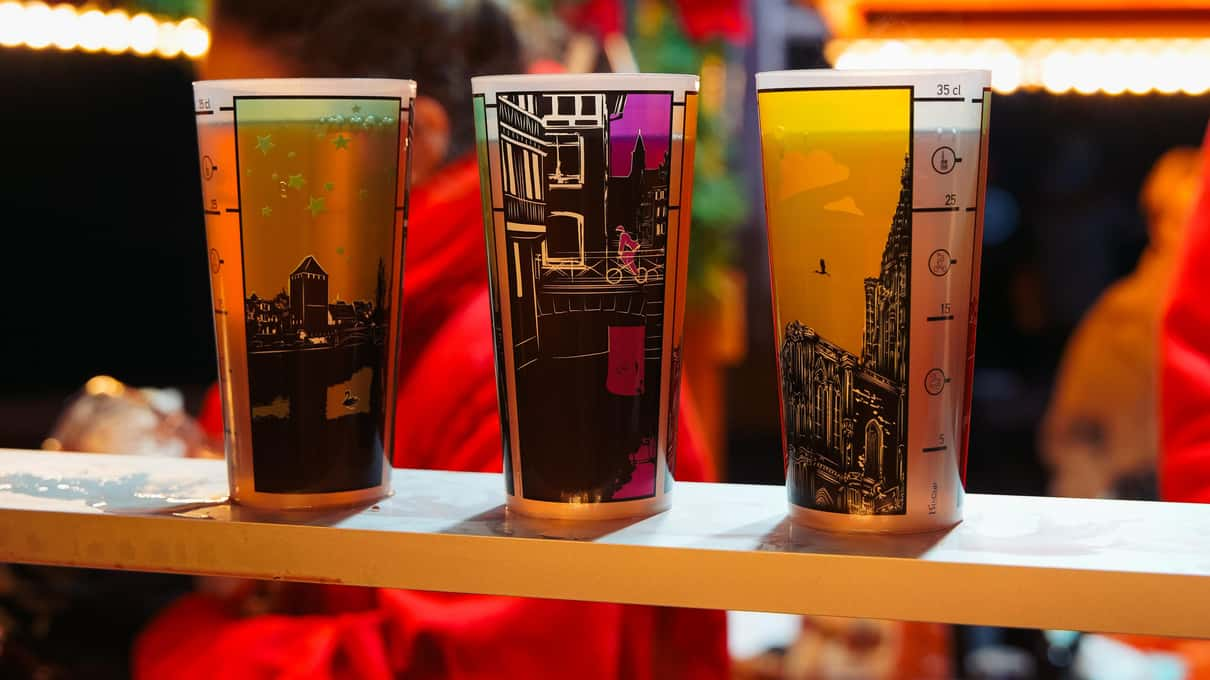
A hot drink helps. Vin chaud comes red or white, and the white version made with Alsace wine is a local specialty, while alcohol-free hot apple juice is easy to find too. Both come in a reusable mug with a deposit refunded when you hand it back, and each costs a few euros. Our guide to Alsatian Christmas food says where to find the white mulled wine.
Plans for a wet day
Steady rain does not have to mean an afternoon in the hotel room. The cathedral is free to enter, and its astronomical clock sets the apostles in motion at 12:30 pm, so plan a visit around noon. For the stories behind the stained glass and the Pillar of Angels, My Cathédrale's 90-minute guided tour, from ~$29, covers the outside and the inside. Its catch is that services can close the cathedral and cancel a tour, and the dress code rules out sleeveless tops and short skirts, which in December rarely troubles anyone.
A long lunch in a winstub (a small Alsatian wine tavern) fills a gray afternoon well, though tables go fast in December, so book one. The city's Christmas program also lists Christmas tradition visits at the Musée Alsacien and concerts in churches, both of which give you a seat out of the weather; check their days in the program.
A food walk with warm stops
Do Eat Better's traditional food tour moves from charcuterie with soft bretzels to a sit-down plate of choucroute garnie over 3.5 hours, from ~$90, with cheese in a fromagerie along the way. Only one glass of Alsace wine is included and tips are extra. You walk 10–15 minutes between stops, so dress for the street.
The same operator's shorter Christmas market food tour, from ~$62, spends its 2 hours outdoors among the chalets, so keep it for a dry afternoon. It is a new listing without reviews yet, and it offers tastings rather than a meal.
Where snow is more likely
If snow matters to you, look east across the Rhine. The Black Forest stands higher than the Rhine plain and is more often white in December, though snow is never guaranteed there either. Abnoba Tours' Black Forest day trip, from ~$139, leaves Place de la Gare at 8:30 am with eight guests at most and a live guide. It stops at Triberg for the cuckoo clocks and the waterfalls, then follows the German Clock Road to Lake Titisee before a guided walk in Freiburg. Its catch is that entry to the falls (about €9) and food cost extra, and it is a sightseeing day rather than a Christmas market day. Pack the warmest layers you brought. Winter day trips from Strasbourg compares it with the other days out.
The village markets of Alsace are outdoors like the ones in the city, so the same clothes work there. Christmas markets in Alsace near Strasbourg lists which days each village opens.
Crowds and the calendar
Weather is only half of comfort, because the crowds decide how long you stand still. Around three million visitors come over the market weeks, and they bunch up on mid-December weekends. The quietest stretch is a weekday in late November or early December. Mondays and Tuesdays are calmer still. 26 December is a public holiday in Alsace, unlike most of France, which matters if you stay on after Christmas.
Short tram rides save cold walks across town, and the park-and-ride lots include a tram ticket; getting to the markets covers both. Families with small children, who chill faster than adults, will find timing ideas in Strasbourg at Christmas with kids.